01
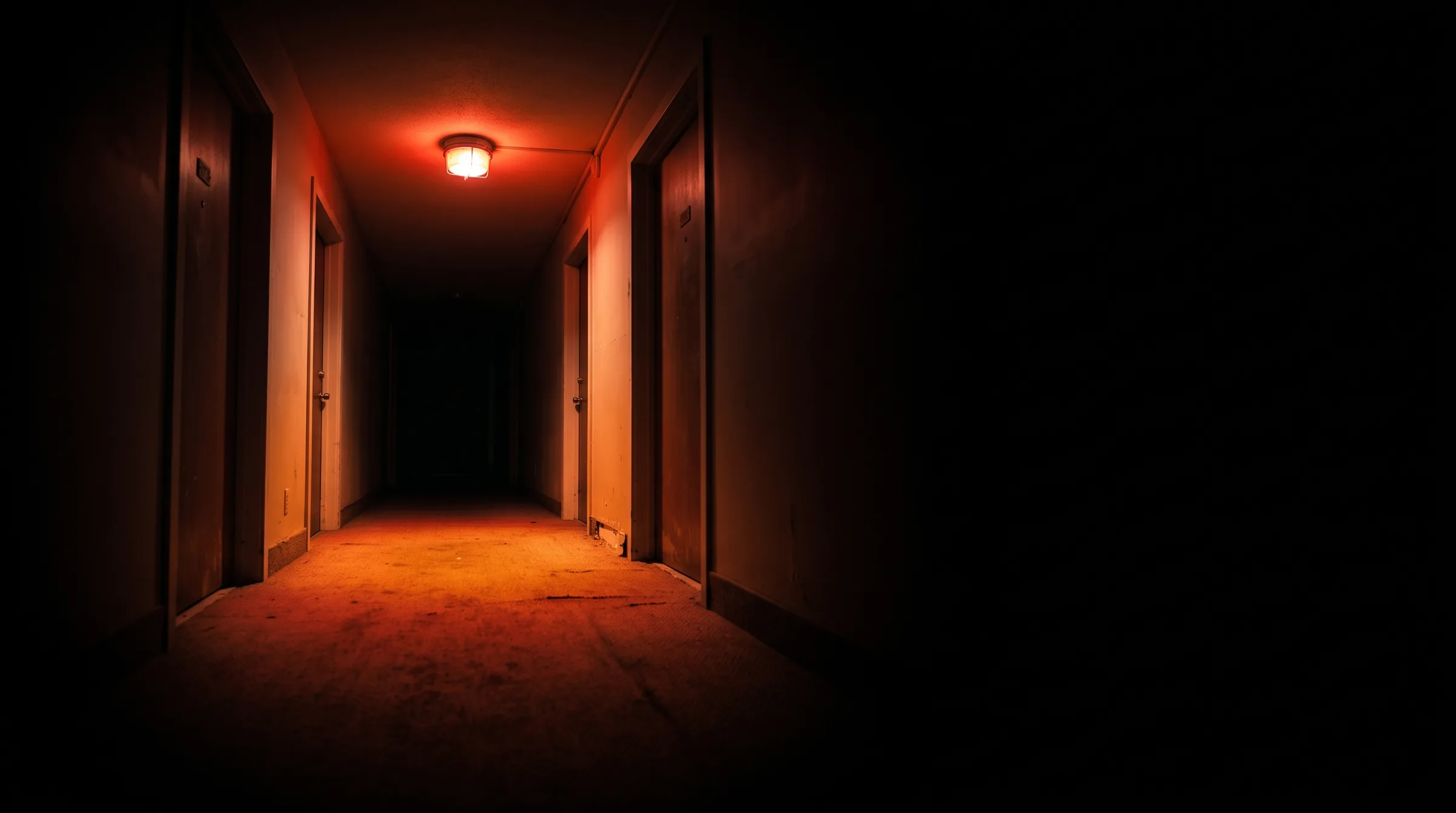
Corridors and stairwells
PIR or HF motion sensors to suit the space, and a central twilight switch that cuts the sensor luminaires off during the day.

Service 04 all of Slovakia
Video intercoms and RFID chip keys for apartment buildings and family houses, motion-sensor lighting for corridors and stairwells, and electric underfloor heating.
When you need it
04.01 · Entry
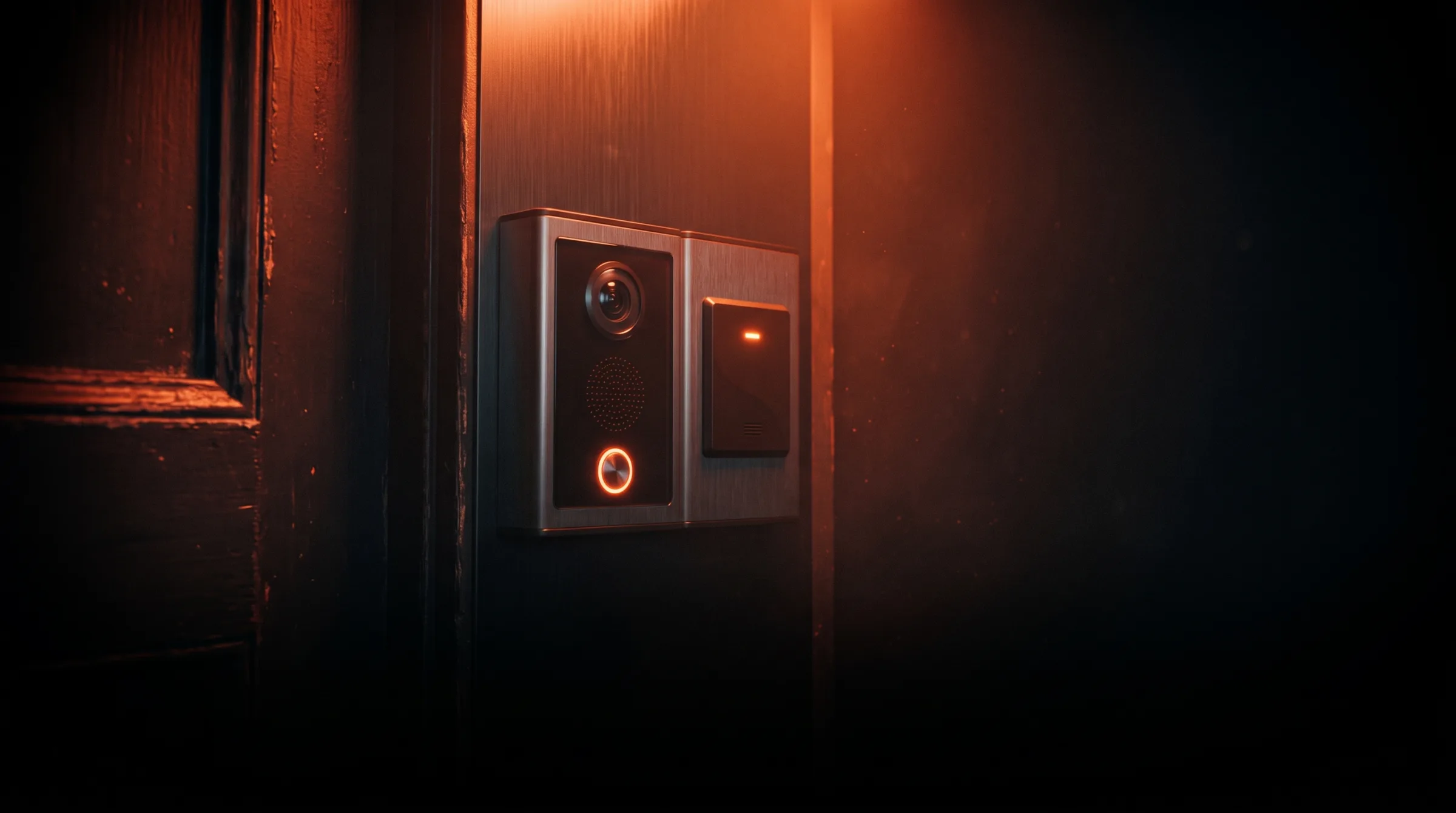
Entrance access with an RFID chip instead of a key, and a video intercom instead of the old audio one. A lost chip is blocked, and the locks stay as they are.
For Apartment buildings, companies, family houses
04.02 · Light
LED luminaires with motion sensors for corridors, stairwells and basements. The light is on only while someone is there.
Outcome A lower bill for the communal areas
04.03 · Heat
Heating films and cables with a thermostat and a weekly programme. A bathroom, a hallway or a whole flat without radiators.
Outcome Heating programmed to the time of day
Scope
01
PIR or HF motion sensors to suit the space, and a central twilight switch that cuts the sensor luminaires off during the day.
02
Underfloor heating with films, self-regulating cables and cables laid in screed, with a thermostat and a programme for the time of day.
03
Audio intercoms replaced with video ones, digital systems for apartment buildings and stand-alone kits for a family house.
04
Entrance access with a chip instead of a key. A lost chip is blocked and the locks stay as they are. In an apartment building we manage the chips and keep a record of entries.
On their own
01 Smart home
Digital two-wire systems for apartment buildings, on the wiring already there.
02 Smart home
Entry on a chip, with a record kept and no locks to change when one is lost.
03 Smart home
Motion sensors for corridors and a central twilight switch against daytime lighting.
04 Smart home
Mats and heating cable under the floor, and de-icing for steps and drives.
Outcome
What you hold in your hand when we leave. Four things you can check without us.
Common questions
A sensor luminaire can switch on in daylight on one floor and only in full darkness on another. A central twilight switch solves it: during the day it cuts the luminaires off completely and switches them only at the set time, all at once.
Corridors and stairwells in apartment buildings get a PIR or an HF (radar) sensor, depending on the space. On standby a PIR sensor draws about 0.05 W, an HF sensor up to 0.3 W.
In new buildings we can lay heating mats under tiles, laminate or wood. We work with cables and equipment from FENIX, DEVI and RAYCHEM.
The shape of the floor decides. A mat comes with the spacing between its loops fixed, so it covers exactly its own area and goes in fast — straight into the adhesive or mortar under the covering. A cable is laid into a concrete or poured anhydrite screed and its loop spacing has to be worked out and kept to, but it follows the curve of a bath or a shower enclosure and covers an awkward room. An ordinary bathroom wants a mat; where the shape has to be traced, a cable. We work with FENIX, DEVI and RAYCHEM.
Yes. Heating cable goes into a new build and into a refurbishment alike — a family house or a block of flats, a weekend cottage, offices, production space — under any floor covering. The design for each room is a matter of choosing the power rating and the length of cable so that its output covers that room's heat loss. A radiator has to run at 65 to 75 °C to heat a room; the floor does the same at 24 to 26 °C, because it radiates across the whole area and stirs up no dust.
A digital two-wire system can use the intercom wiring already in the building, so the corridors need no trunking and no chasing. A system with audio handsets can have video added later. Often the owners’ association pays for the audio base, and whoever wants a video handset pays the difference.
Yes, and it is the main reason a programmable installation pays off. We plan as many as five lighting circuits in a single room; on a standard installation that means a five-gang plate with five switches — and twice that if you want to switch from more than one place. With a scene unit, one button lights the whole room, a second dims everything and a third switches it off; on the way out you switch the lights off and, if the blinds are motorised, close them at the same time. The controls look like ordinary switches and can be programmed later.
Yes, where we run the system: a new chip goes on the list of those allowed in and a lost one comes off it, so the locks never need changing. We do not copy chips from somebody else's system — what we install is entrance locking for an apartment building on a chip, a system with a list of chips and a record of who came in and when.
Heating placed below the window, where cold air falls off the glazing and where the condensation appears first in winter. We do it both ways: heating cable or a mat built in under the sill, which stays out of sight and suits a room that is being worked on anyway, and an electric convector or a sill-height heater, which can go into a room that is already finished. The building decides — cable during a refurbishment, a heater into a finished interior.
Yes, de-icing steps and outdoor surfaces is work we do. Cable under a flight of steps or in a driveway keeps the surface free of snow and ice, so it needs neither clearing nor salting; outdoors the self-regulating cable suits best, as it takes its own power down where the surface is already warm. The cable belongs inside the construction, so it is done when the surface is built or rebuilt, not afterwards.
DEK touch keys (iButton) are used less and less, because a vandal easily damages a reader with a contact surface. Contactless 125 kHz fobs have readers sealed in plastic, but a fob can be copied without authorisation. Encrypted DESFire fobs are well protected; checking one takes a little longer, still less than a second.
Advice or a call-out
Need your installation checked?
0902 481 461Tell us what is happening, or what needs inspecting. We agree the scope, the price and the next free date on the phone. If you cannot get through, we are on a job and will call you back.