01
A new system
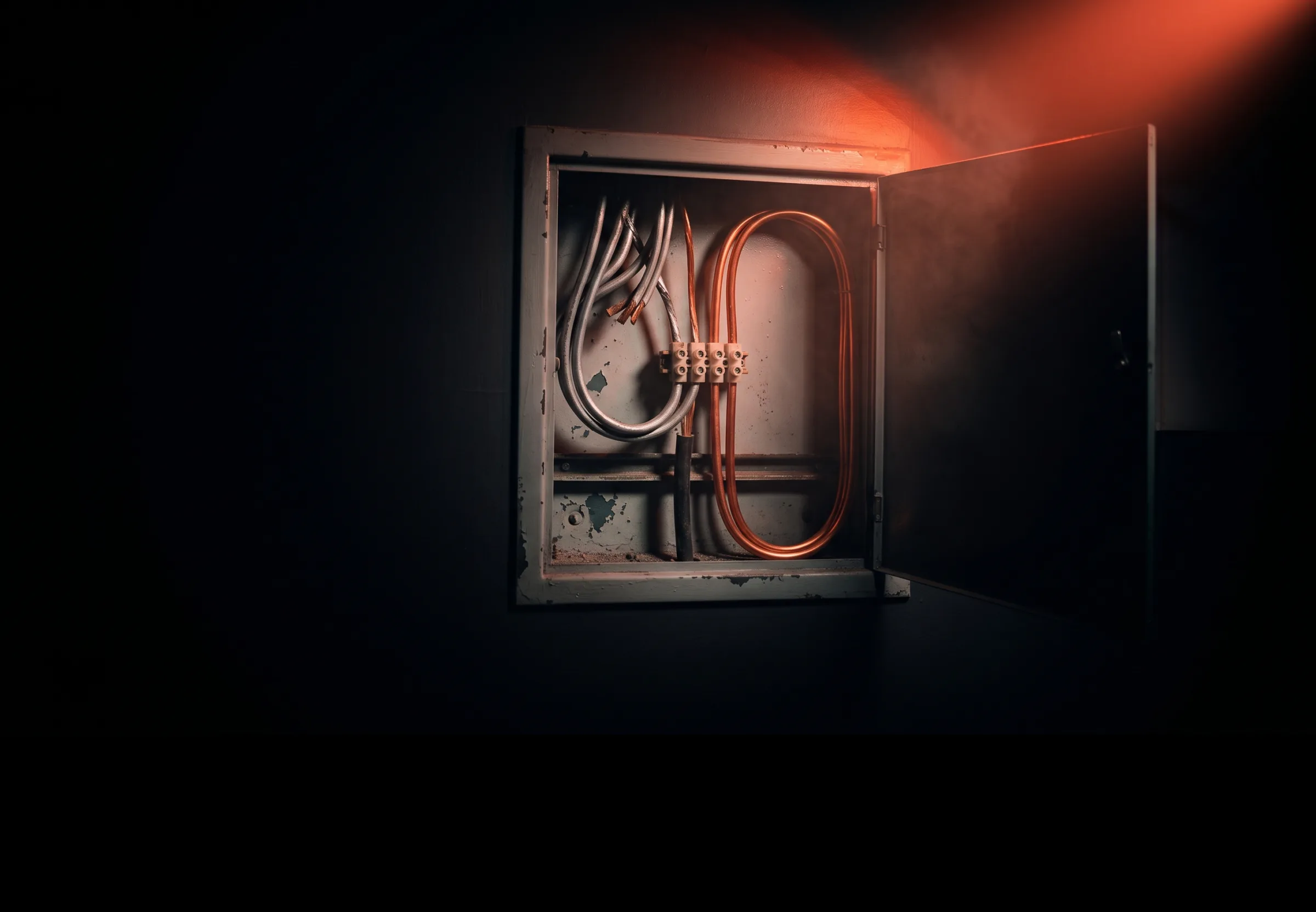
Air termination, down conductors and earthing designed to the STN EN IEC 62305 series, taking account of the roof shape and whatever stands on it — a chimney, a dormer, an aerial or a solar panel.

Inspections and lightning protection all of Slovakia
A new system on a family house or an apartment building, and modernisation of an older one that no longer meets today's standard. Earth resistance is measured and the report records it.
Scope
01
Air termination, down conductors and earthing designed to the STN EN IEC 62305 series, taking account of the roof shape and whatever stands on it — a chimney, a dormer, an aerial or a solar panel.
02
An older system is usually working; it simply no longer meets the current standard. An inspection says what it lacks — often one more down conductor or a change to the earthing rather than a whole new system.
03
Earth resistance is measured at handover and at every inspection after it. It is the one number that says whether the system will carry the current to ground, and the one that changes as the electrode corrodes.
04
We inspect and measure existing systems too; that belongs with inspections. The intervals at which it repeats are in the tables on the inspection intervals page.
05
The risk assessment under STN EN IEC 62305-2: where the building stands, how big it is, what it is clad in and what is inside. From that comes a protection level, and from the level the spacing of down conductors and the mesh size. Without it a design is a guess.
06
A conventional air-termination system is what the standard knows and what can be assessed. So-called active systems have their own inspection intervals and their claimed reach is not accounted for in STN EN IEC 62305, so we do not design them.
07
Lightning protection carries the current away outside the building, but induced surges still arrive along the wiring. Without arresters in the consumer unit the electronics stay unprotected although the roof is covered, so we deal with both together.
Handed over
Common questions
Not every one. It follows from the risk assessment under STN EN IEC 62305-2 and from what the building authority requires at approval. On an ordinary family house it is usually required, but the assessment decides, not an assumption.
It does, which is why the two are planned together. Panels must keep their separation from the air termination and their frames must be bonded. If panels are going on, that is the cheapest moment to adapt the system.
One or two days on an ordinary family house, if the roof is reachable and the electrode can be laid. The earthing takes longest, not the roof — a trench around a house cannot be hurried.
By protection level: levels I and II at least every 2 years, III and IV every 4 years, and a building with an area at risk of explosion every year. All the intervals are in the tables on the inspection intervals page.
The result of the risk assessment under STN EN IEC 62305-2. It sets how closely spaced the down conductors are and how fine the mesh is — so it decides how much material the roof actually needs.
No. Their claimed reach is not accounted for in STN EN IEC 62305 and they carry their own inspection intervals. We design the conventional system the standard knows and another technician can assess.
No. It carries the current away outside, but induced surges arrive along the wiring. Electronics are protected by arresters in the consumer unit, and those are dealt with together with it.
They go into the report with proposed measures, and we say which are urgent and which can wait. We can put them right too — the quote is itemised, so material and labour are both visible.
Advice or a call-out
Need your installation checked?
0902 481 461Tell us what is happening, or what needs inspecting. We agree the scope, the price and the next free date on the phone. If you cannot get through, we are on a job and will call you back.